Enter product details (such as color, size, materials etc.) and other specific requirements to receive an accurate quote.
leave a message
If you are interested in our products and want to know more details,please leave a message here,we will reply you as soon as we can.
Submit
other

Blog

Home Blogs

Blog

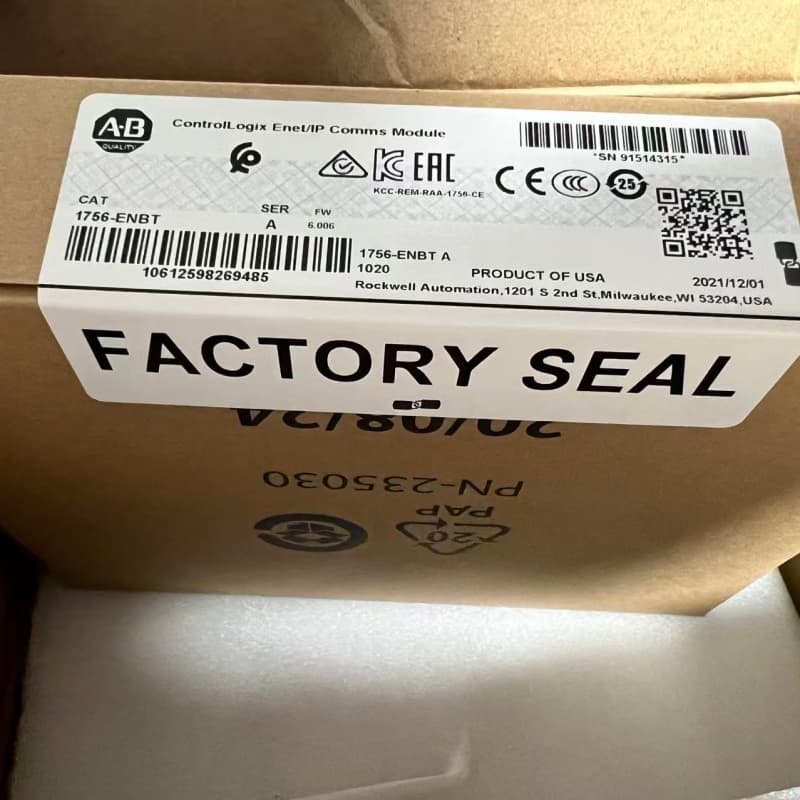
  • Allen-Bradley 1756-ENBT/A: A classic choice for ControlLogix Ethernet communication modules
    Allen-Bradley 1756-ENBT/A: A classic choice for ControlLogix Ethernet communication modules
    Jan 26, 2026
    In the field of industrial automation, stable and reliable network communication is the cornerstone of efficient control system operation. The Allen-Bradley 1756-ENBT/A, a classic Ethernet communication module for Rockwell Automation's ControlLogix platform, has long played a crucial role in numerous industrial applications. This article will delve into the technical characteristics and core parameters of this product, and through comparisons with newer and older products, help you fully understand its positioning and value.   I. Product Overview: What is it?   The Allen-Bradley 1756-ENBT/A is an EtherNet/IP communication bridge module specifically designed for ControlLogix control systems. Its core function is to connect ControlLogix controllers to EtherNet/IP networks, enabling high-speed data exchange between the controller and various industrial devices.   Simply put, it's the "gateway" for ControlLogix systems to access the industrial Ethernet world—one end communicates with the ControlLogix processor via the backplane bus, and the other end connects to switches, HMIs, inverters, servo drives, and other devices via an RJ45 Ethernet port.   II. Core Parameters and Technical Specifications   Based on multiple technical documents, the core parameters of 1756-ENBT/A are summarized as follows:   Parameter Category | Specific Specifications   Communication Protocol: EtherNet/IP   Physical Interface: 1 x RJ45 (Cat5 cable supported)   Communication Rate: 10/100 Mbps, auto-sensing, supports half-duplex/full-duplex   TCP Connections: 64   CIP Connections: 128   Data Throughput: 5000 I/O packets/sec + 900 HMI/MSG packets/sec   Backplane Current Consumption: 700 mA @ 5.1V DC / 3 mA @ 24V DC   Power Consumption: 3.7 W   Heat Dissipation: 12.6 BTU/hour   Operating Temperature: 0°C ~ 60°C   Storage Temperature: -40°C ~ 85°C   Relative Humidity: 5% ~ 95% (non-condensing)   Isolation Voltage: 30V continuous, basic insulation type     Weight: Approx. 0.45 lbs (approx. 204 g)   In addition, the module also has network diagnostic functions. Users can access the built-in web server of the module through a standard web browser to view diagnostic information such as IP traffic statistics, TCP/UDP connection status, conflict histogram, and module runtime.   III. Functional Features and System Integration   1. Multi-role Capability   The 1756-ENBT/A can simultaneously perform two roles:   Bridge Mode: Serves as the communication interface between the ControlLogix controller and the EtherNet/IP network.   Adapter Mode: Placed in a remote I/O chassis, it acts as a remote I/O adapter, enabling configuration and data acquisition of distributed I/O modules.   2. Flexible Topology Support Since the module is equipped with only a single Ethernet port, its network topology primarily supports linear or star topologies. In practical applications, it is usually necessary to use an external Ethernet switch to build a more complex network architecture.   3. Seamless Software Integration   The 1756-ENBT/A can be seamlessly integrated with RSLogix 5000/Studio 5000 programming software. Through Add-On Profile (AOP) configuration files, the module can directly share I/O process data with the Logix processor memory without writing any ladder logic or increasing PLC scan time.     4. Cross-system interconnection capability: Through a third-party gateway module (such as the Molex SST series), the 1756-ENBT/A can achieve communication interconnection with Siemens SIMATIC controllers (S5, S7 series), SIMOTION motion controllers, SINAMICS frequency converters, and other equipment. This is of great significance for production lines that use equipment from different brands.   IV. Competitive Product Comparison: 1756-ENBT/A vs. 1756-EN2T vs. Third-Party Solutions   To gain a clearer understanding of the 1756-ENBT/A's market positioning, the following comparison is made with next-generation modules and third-party solutions:     4.1 Comparison with Next-Generation ControlLogix Ethernet Modules Comparison Items 1756-ENBT/A (Classic Model) 1756-EN2T/EN3T (Next Generation) Communication Speed 10/100 Mbps 10/100/1000 Mbps (Gigabit) CIP Connections 128 256+ Data Throughput Approximately 5900 packets/second higher, supports larger data volumes. Network ports 1 RJ45 usually 2, supports device-level ring network (DLR) Release date Earlier, gradually phased out currently mainstream, still in production Applicable scenarios Small to medium-sized systems, maintenance of existing projects new large-scale projects, high-speed data applications.   The 1756-ENBT/A is one of the earlier Ethernet modules in the ControlLogix platform. For new projects, Rockwell recommends using the more powerful EN2T/EN3T series. However, for the maintenance and expansion of existing systems, the ENBT/A remains an indispensable choice.   4.2 Comparison with Third-Party Communication Gateway Solutions   Taking the Molex SST communication module as an example: Comparison Items 1756-ENBT/A (as network backbone) SST communication module (third-party gateway) Core Functions Standard EtherNet/IP communication Protocol conversion (Modbus TCP, Siemens Industrial Ethernet) Communication Targets Rockwell ecosystem devices third-party controllers such as Siemens, RFID, and frequency converters Configuration Method RSLogix 5000 integration independent configuration software generates CIP paths Memory Usage Direct I/O sharing, no additional overhead built-in 32,000-word registers + 32,000-bit database Applicable Scenarios Pure Rockwell environments multi-brand mixed systems; system interconnection projects   V. Application Scenarios and Procurement Reference Typical Application Areas The 1756-ENBT/A is widely used in:   Factory Automation: Connecting PLCs, HMIs, frequency converters, and servo drives   Process Control: Process data acquisition and control   Distributed I/O: Controlling I/O modules in remote racks   SCADA Integration: Data interaction with upper-level monitoring systems   Equipment Interlocking: Data exchange between high-speed processors、   Market Procurement Reference   Based on quotations from professional industrial control spare parts platforms (2024-2025 data), the market reference price for 1756-ENBT/A is as follows:   Product Status | Reference Price (USD) | Description   Brand New Original Packaging | $2,400 - $2,700 | New Stock   Refurbished/Repaired | $599 - $800 | Tested and repaired, high cost-performance ratio   Repair Service | Approx. $499 | User sends faulty part for repair   Note: The above are international market reference prices. Actual procurement prices are affected by factors such as channels, quantity, and exchange rates, and domestic market prices may differ. The procurement announcement from Zhejiang Energy Port in February 2026 still includes this module model, indicating continued demand in the existing market.   VI. Selection Recommendations and Considerations   Suitable Scenarios for 1756-ENBT/A: * Existing System Maintenance: Existing ControlLogix systems using ENBT/A require replacement or expansion. * Small to Medium-Scale Applications: Moderate I/O points, no need for gigabit bandwidth or numerous CIP connections. * Limited Budget: Relatively low cost for refurbishment or repair. * Simple Network Topology: No need for device-level ring network (DLR) redundancy. New Project Recommendations: * Prioritize the 1756-EN2T/EN3T series for new projects to achieve higher performance and longer lifespan support. * For scenarios involving multiple brands, evaluate third-party gateway solutions or EN series modules supporting multiple protocols. Installation Considerations: * Module installation location is arbitrary, occupying one ControlLogix rack slot. * Use Cat5 or higher specification network cables. * Ensure the operating environment temperature is within the range of 0°C to 60°C. * Pay attention to air/power supply quality to avoid common-mode interference affecting communication stability.   VII. Summary Allen-Bradley The 1756-ENBT/A, a classic Ethernet communication module for the ControlLogix platform, boasts a large installed base worldwide thanks to its stable performance and reliable quality. Although its technical specifications have been surpassed by the newer EN2T/EN3T series, it remains a critical component for maintaining existing systems and ensuring production continuity.   When choosing whether to use the 1756-ENBT/A, the core consideration should be whether the application scenario is maintenance/replacement or a new project. For maintenance scenarios, it is the most economical and direct choice; however, for new projects, it is recommended to embrace the more advanced next-generation Ethernet modules.     The technical parameters cited in this article are from multiple publicly available technical documents and industrial control spare parts platforms. For specific parameters, please refer to the latest official documentation from Rockwell Automation.          
    Read More
  • More than just
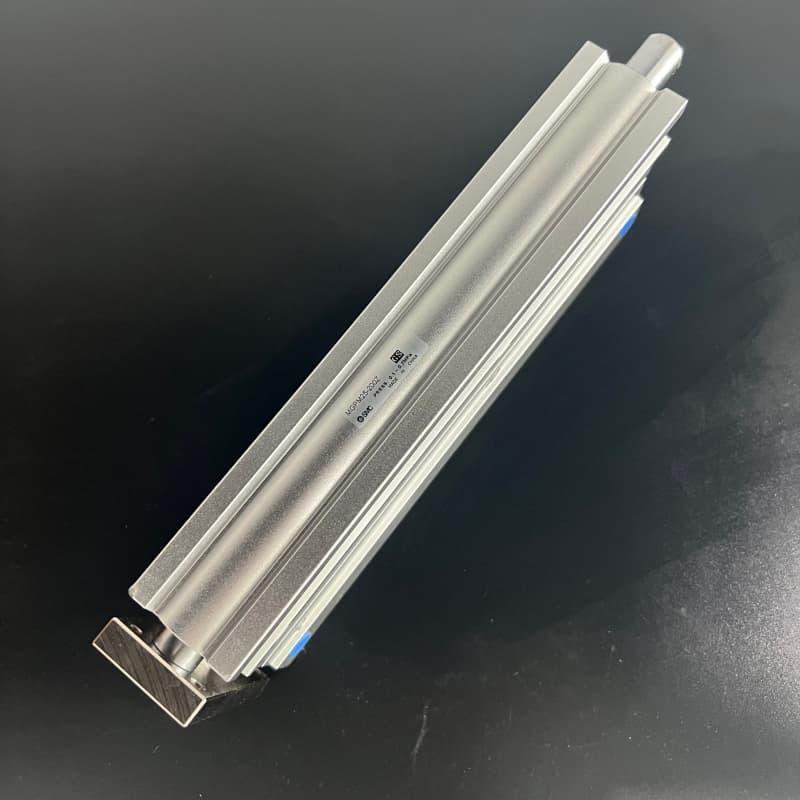
    More than just "push and pull": How SMC cylinders have become "masters of motion" in industrial automation.
    Jan 26, 2026
    In the world of industrial automation, if there were an award for the most diligent "executor," the pneumatic cylinder would undoubtedly be among the top contenders. From welding and gripping on automotive production lines to precision assembly in electronics factories, and pushing and packing on food packaging lines, the pneumatic cylinder converts the energy of compressed air into mechanical power, completing one "push" and "pull" action after another.   And in the global pneumatics technology field, SMC is an unavoidable name. This Japanese company boasts over 11,000 basic series and more than 610,000 specifications of products, with its pneumatic components widely used in the automotive, semiconductor, robotics, and food packaging industries.As one of SMC's flagship products, the cylinder has evolved far beyond simple linear reciprocating motion, moving towards integration, intelligence, and high adaptability. Today, let's talk about some of the star products in the SMC cylinder family and see how they excel in their respective "positions".   I. CQ2 Series: The "Space Magician" Among Thin-Type Cylinders In many automated devices, space is a precious resource. Traditional round cylinders are often a headache for designers when it comes to layout due to their large size. SMC's CQ2 series slim cylinders were developed to solve this problem. The most striking feature of the CQ2 series is its thinness. It integrates piping and magnetic switches on the same mounting surface, with the magnetic switch completely concealed within the cylinder body. This compact design allows for a smaller and lighter overall structure for the fixture and equipment. Imagine the design flexibility a successfully slimmed-down cylinder can offer within the confined space of a mobile phone assembly line.   Even more remarkable is that the CQ2 series doesn't sacrifice performance or adaptability while pursuing compactness. Its cylinder diameter covers an ultra-wide range from ø4 to ø200, handling everything from minute precision operations to heavy-duty industrial applications. Whether in cleanrooms, standard workshops, or harsh environments containing water, oil, dust, or even welding slag, the CQ2 series offers corresponding expansion options. According to customer field data, its long-life specifications have accumulated over 100 million cycles, demonstrating its exceptional reliability. In short, the CQ2 series is an ideal choice for space-constrained scenarios; it is thin yet powerful, small yet extraordinary.   II. IN-777 Series: Servo Cylinders, Enabling Precise Positioning Even with Pneumatics In most people's minds, the positioning accuracy of pneumatic cylinders is inferior to that of electric cylinders or servo motors because they rely on the compressibility of gas, and their speed is easily affected by load changes. However, SMC's IN-777 series servo cylinders break this stereotype.   The IN-777 series is a revolutionary product that integrates a servo valve, controller, and cylinder into a single design. It achieves multi-point positioning and precise control that traditional pneumatic cylinders struggle to accomplish, with a repeatability of ±0.5mm (tested under the conditions of a ø200mm cylinder, 200mm stroke, and a 70kg load). This means that pneumatic solutions can be applied in many scenarios where a certain level of positional accuracy is required, but extremely high precision is not necessary.   For example, in gate control at wastewater treatment plants or in flotation processes at mineral processing plants, valve openings need to be adjusted according to water level or slurry concentration. The IN-777 series can precisely control the cylinder's extension position like a servo electric cylinder, while retaining the advantages of pneumatic systems such as simple structure, lower cost, and explosion-proof safety.   In addition, it features several intelligent functions: self-diagnostic capabilities (via LED lights and signal outputs), easy initial setup (position setting via I/O signals), 10-level speed adjustment, and an emergency stop function in case of gas or power outages. These features simplify maintenance, eliminating the need for complex adjustments even when replacing parts. In short, the IN-777 series is a perfect fusion of pneumatics and electronic control, providing a cost-effective new option for applications requiring multi-point positioning and process control.   III. MKB & MRQBS Series: Integrated "Compound Sports Experts" In many automated processes, a single workstation may need to simultaneously perform compound actions such as clamping and rotating or extending and swinging. Traditional solutions often require separate linear and rotary cylinders, combined through complex connecting mechanisms, which is both space-consuming and increases potential failure points.   SMC's solution is to introduce functionally integrated cylinders, such as the MKB series rotary clamping cylinders and the MRQBS series extending and swinging cylinders.   MKB Series: Rotary Clamping Cylinder The MKB16-20LZC is a typical rotary clamping cylinder that integrates rotation and clamping functions, achieving simultaneous 90° precise rotation and powerful clamping through pneumatic drive. With a 16mm bore and 20mm stroke, its extremely compact structure makes it particularly suitable for applications with high space utilization requirements, such as electronics assembly and automotive parts processing. Repeatability is ±0.1mm, and core components undergo special hardening treatment, ensuring a service life of over 10 million cycles. In robotic end-effector gripping, automated inspection equipment, or mold positioning, the MKB series effectively solves the problems of large space occupation and low coordination efficiency associated with traditional separate solutions.   MRQBS Series: Extending and Swinging Cylinder If the MKB series solves the problem of "clamping + rotation," then the MRQBS series solves the problem of "linear extension + rotation" combined motion. Taking the MRQBS32-50CA as an example, it achieves a 50mm linear stroke plus a 90° rotation through a precision gear and rack transmission structure. This design can replace the traditional "linear cylinder + rotating unit" combination, saving over 40% of installation space and shortening the combined motion cycle by 30% compared to separate solutions. In scenarios such as chip rotation and mounting in electronic assembly and flipping assembly of automotive parts, the MRQBS series significantly improves equipment efficiency while reducing potential failure points.   In short: The MKB and MRQBS series are "composite motion masters" in the pneumatic field, achieving two functions with a single unit, providing core support for equipment miniaturization and high efficiency.   IV. Special Environment Series: Making Cylinders "Fearless of Wind and Rain" Industrial production environments vary widely, some even qualifying as "harsh." SMC has developed a variety of environmentally adaptable cylinders to address these challenging conditions.   For example, the CG5-S series stainless steel cylinders feature external components made entirely of SUS304 stainless steel and are equipped with special scrapers to prevent water ingress. Internally, they use FDA-compliant food-grade grease. They are particularly suitable for the humid, high-cleanliness environments required in food and beverage machinery, ensuring hygienic and durable performance even under stringent washing conditions.   For applications involving flying fine powders such as ceramic powder, toner, and paper dust, SMC offers powder-resistant cylinders (such as the CM2/CQ2/MGP-XC92 series). By installing two iron-nickel scraper rings on the guide rod, they prevent the intrusion of dust particles smaller than 30μm, improving durability by four times compared to standard products.     In short: From food processing to dusty environments, SMC has provided cylinders with tailor-made "protective suits," ensuring stable operation in any harsh environment.   Conclusion From simple "push" and "pull" to precise positioning control, and then to complex compound movements and adaptation to extreme environments, the technological evolution of SMC cylinders is itself a microcosm of industrial automation's continuous pursuit of higher efficiency, smaller size, and stronger functionality.   SMC pneumatic components, with their solenoid valve lifespan exceeding 30 million cycles, oil-free lubrication technology, and IO-Link real-time monitoring capabilities, have built a stable, efficient, and intelligent pneumatic ecosystem. In this era of pursuing intelligent manufacturing and flexible production, the cylinder may be one of the most traditional actuators, but thanks to SMC's innovation, it is constantly being revitalized, becoming an indispensable "master of motion" in automated equipment.   Next time you see a high-speed automated production line, perhaps you can consider how many SMC cylinders are silently and precisely fulfilling their mission behind the scenes.
    Read More

  • Festo VPPE-3-1-1/8-6-010-E1 557772: A Proportional Pressure Valve Designed for Simple Control Tasks
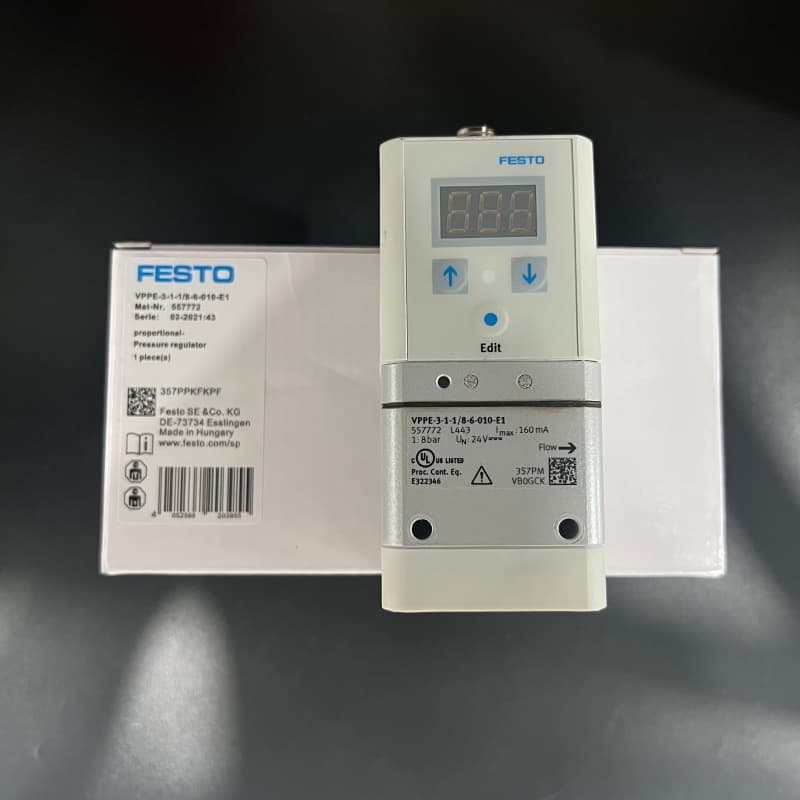
    Festo VPPE-3-1-1/8-6-010-E1 557772: A Proportional Pressure Valve Designed for Simple Control Tasks
    Jan 26, 2026
    In the field of industrial automation, precise pneumatic control is often key to product quality and production efficiency. The product we're introducing today—the Festo VPPE-3-1-1/8-6-010-E1 (order number 557772)—is a practical choice created by Festo for proportional pressure control tasks that don't require complex functions but demand stable and reliable operation.   I. What is it? The VPPE series is one of the most cost-effective series in Festo's proportional pressure valve product line. The full name of this model reveals its core characteristics: VPPE: Product series code, representing a proportional pressure valve 3: Three-way valve construction 1: Specific design version 1/8: G1/8 threaded interface 6: Pressure adjustment range 6 bar 010: Range code E1: Analog signal input (0-10V) 557772: Festo internal order number     In short, it is a precision device that controls the output air pressure via an electrical signal—you give it a 0-10V voltage signal, and it will output the corresponding air pressure (0.06-6 bar) proportionally.   II. Core Technical Parameters: Small Size, Big Power According to Festo's official technical data, the core parameters of this valve are as follows:   Parameters Values Pressure Adjustment Range: 0.06 bar ~ 6 bar Input Pressure Range: 6 bar ~ 8 bar Standard Rated Flow Rate: 800 l/min Power Supply Voltage: 21.6 V ~ 26.4 V DC Maximum Power Consumption: 4.2 W Linearity: ±1% FS Hysteresis: 0.5% FS Repeatability: 0.5% FS Total Accuracy: 1.25% FS Protection Rating: IP65 Product Weight: 390 g     It is worth noting that the standard rated flow rate of 800 l/min—providing such a large flow rate in such a compact size (only 390g)—is thanks to its pilot-controlled diaphragm pressure regulating valve design.   III. Where Does It Come From?   There is some confusion online regarding the origin of this product. Although Festo is a German brand headquartered in Esslingen, Germany, the VPPE-3-1-1/8-6-010-E1 is actually manufactured in Hungary. This has been confirmed on the product pages of several authoritative distributors (such as RS Components and Distrerec)—the country of origin code is clearly marked as "HU" (Hungary). The claim of "Made in Germany" often arises because the seller mistakenly lists the country of origin as the country of manufacture.   IV. Where Is It Suitable for?   1. Simple Pressure Control Tasks Festo's official positioning for the VPPE series is very clear: "Providing excellent performance for simple control tasks at a highly competitive price." This means it is ideal for applications that do not require complex PID control or multi-parameter settings, but only require "given signal, output pressure."   2. Lithium-ion Battery Production   It's worth noting that Festo specifically labels this product as "suitable for lithium-ion battery production"—its materials exclude metals such as copper, zinc, and nickel that could affect battery performance. This detail indicates that VPPE has passed rigorous cleanliness verification and can be used in battery manufacturing environments with extremely high material purity requirements.   3. Pressure Regulation of Pneumatic Systems   Typical applications include:   Pressure control of pneumatic grippers   Pressure regulation of dispensing equipment   Leak testing equipment     Pneumatic control of printing machinery   V. What makes it special?   1. Three-digit LED display: This model is equipped with a three-digit LED display that shows the current output pressure value in real time. This is very practical for on-site commissioning and operational monitoring, allowing you to understand the current working status without the need for an additional host computer connection.   2. Built-in safety features: The VPPE has built-in reverse polarity protection and short-circuit protection. This is a thoughtful design for on-site installers—even if the power cord is accidentally reversed, the equipment will not be immediately damaged.   More importantly, its safety position design is noteworthy: According to the official safety instructions, if the power cord is interrupted, the output pressure will be maintained in an uncontrolled state. This means that the valve will not instantly release pressure after a power outage, avoiding impact on downstream equipment.     3. Flexible installation options: "Any installation location, preferably vertical"—this is the official installation guideline. This flexibility allows the VPPE to adapt to various space-constrained installation environments.   VI. Price Reference   According to data from industrial e-commerce platforms, the market reference price for this product is approximately RMB 2,968 per unit. Of course, the actual transaction price will fluctuate depending on factors such as purchase volume, distribution channels, and exchange rates. Considering its German brand background, manufacturing quality originating in Hungary, and Festo's consistent product reliability, this price is quite competitive among similar products.   VII. Precautions   Several points require special attention during selection and installation:   Air Source Quality Requirements: VPPE requires compressed air to meet ISO 8573-1:2010 [7:4:4] standards, i.e., solid particles ≤ 7, moisture content ≤ 4, and oil content ≤ 4. Substandard air source quality will affect the valve's service life and control accuracy.   Oil Mist Lubrication Prohibited: The official specifications clearly state "Oil lubrication is prohibited." This means that the upstream air source processing unit cannot use oil mist lubrication, otherwise it will damage the valve's internal components.   Medium Temperature Limits: The medium temperature range is 10°C ~ 50°C. If the ambient temperature is too low or too high, appropriate insulation or heat dissipation measures are required.   Conclusion: The Festo VPPE-3-1-1/8-6-010-E1 557772 is a clearly defined and reliable proportional pressure valve. Unlike its higher-end series, it doesn't offer complex adjustable parameters and multiple control modes, but it is precisely this "just right" simplicity that makes it an ideal choice for many industrial applications.     As Festo officially describes it: "Reliable, feature-rich, and easy to operate"—these twelve words perhaps best summarize the VPPE series. Whether for the lithium battery industry, pneumatic system integration, or equipment maintenance and replacement, this Hungarian-made German brand valve deserves to be included in your selection list.  
    Read More
  • Are Encoder Faults on Your Siemens Servo Motors Causing Unplanned CNC Downtime?
    Mar 31, 2026
    A sudden axis fault on a critical CNC mill or packaging line is one of the most expensive disruptions a plant floor can experience. The operator panel flashes a red error, the spindle retracts, and production halts. Often, the diagnostic buffer on the main Siemens PLC points to a seemingly obscure drive fault—perhaps an F31115 or F31116 error indicating an encoder amplitude issue or a Drive-CLiQ communication failure.   When your SIMATIC controller loses track of the exact rotor position of a synchronous servo motor, the SINAMICS drive instantly cuts torque to prevent catastrophic mechanical crashes.   Maintenance teams frequently waste hours swapping Drive-CLiQ cables or replacing the Motor Module inside the electrical cabinet, only to realize the issue is physically located at the machine axis. The root cause is almost always degraded feedback components or deteriorating stator insulation inside the servomotor itself.   Understanding the specific tolerances, cooling profiles, and lifecycle stages of the Siemens 1FT and 1FK motor families is the only way to accurately diagnose these faults and permanently eliminate the downtime.   Decoding Axis Faults: Heat, Vibration, and Ingress Siemens synchronous motors are engineered for highly dynamic, precise movements. However, the operational environment degrades internal components over time. The encoder—the precision optical or magnetic sensor mounted at the non-drive end of the motor—is highly susceptible to three primary killers: Thermal Overload: Continuous operation at peak torque without adequate cooling degrades the optical disk's clarity or demagnetizes the rotor components. Mechanical Vibration: Bearing wear allows micro-movements of the rotor shaft. This vibration translates directly into the encoder housing, causing the scanning reticle to misalign. Fluid Ingress: Cutting fluids and hydraulic oils can bypass aging shaft seals (specifically on the drive end), migrating through the stator housing and pooling in the encoder compartment.   You can usually predict an impending motor failure before the drive completely trips. By monitoring the "r" parameters (read-only monitoring values) within the SINAMICS S120 drive via your TIA Portal or STARTER software, you can track the actual encoder signal voltage. When the peak-to-peak voltage of the sin/cos signals begins dropping below acceptable thresholds, an encoder failure is imminent.   1FT vs. 1FK Series: Identifying Your Hardware Limits When an axis motor fails, engineering teams must decide whether to source an exact legacy replacement or upgrade to a newer generation. This requires a deep understanding of the differences between the 1FT and 1FK motor families.   The 1FT series (1FT6 and 1FT7) are heavy-duty, high-performance motors designed for stringent machine tool applications requiring extreme precision and high overload capabilities. The 1FK series (1FK7) are compact, highly dynamic motors built for standard servo applications like packaging, handling, and robotics.   Siemens Servo Motor Technical Comparison Technical Parameter 1FT6 Series (Legacy) 1FT7 Series (Current High-Performance) 1FK7 Series (Current Compact) Primary Application Heavy machine tools, printing High-end CNC, complex motion control Packaging, material handling, robotics Cooling Options Natural, Forced Ventilation, Water Natural, Forced Ventilation, Water Natural convection only Encoder Interface 17-pin/Resolver (Legacy) Drive-CLiQ standard Drive-CLiQ standard Overload Capacity Very High (up to 4x rated torque) Very High (up to 4x rated torque) High (up to 3x rated torque) Rotor Inertia Medium to High Optimized (lower than 1FT6) High to Very High (for load matching) Protection Rating IP64 / IP65 IP65 / IP67 IP64 / IP65   Navigating Replacements and Upgrades If a machine built in the early 2000s goes down, you are likely dealing with the 1FT6 family. For example, if you are currently running a legacy Siemens 1FT6 series 1FT6108-8SF71-1DA0, replacing it requires matching the exact shaft dimensions, cooling method, and encoder type (incremental vs. absolute). Because 1FT6 motors often rely on older 17-pin encoder connections rather than modern Drive-CLiQ, sourcing a direct factory-new replacement can be difficult. Procurement teams must often rely on specialized distributors who maintain inventory of these exact legacy models to get the machine running in days rather than months.   Conversely, newer machines utilize the highly optimized 1FT7 and 1FK7 lines. These motors feature robust Drive-CLiQ interfaces, which automatically transmit motor plate data (rated current, maximum speed, thermal limits) directly to the SINAMICS drive, eliminating manual parameterization.   If a pick-and-place robot or a standard conveying axis fails, securing a 1FK7044-7AF71-1AA3 servo motor replacement from inventory is highly efficient. The 1FK7 series is characterized by its compact volume, making it easy for technicians to physically swap the motor in tight mechanical spaces. Because it uses Drive-CLiQ, the new motor is instantly recognized by the drive system upon power-up.   For applications demanding the highest surface finish quality—such as 5-axis aerospace milling or precision grinding—the motor's cross-profile accuracy is non-negotiable. In these scenarios, replacing a damaged axis drive with a Siemens 1FT7034-1AK70-1DG1 permanent-magnet motor restores the machine's original micron-level accuracy. The 1FT7's stator is mechanically isolated from the motor housing, providing significantly better heat dissipation and almost zero torque ripple at low RPMs compared to standard motors.   Establishing Preventative Maintenance Baselines To prevent sudden axis faults, maintenance departments must move away from reactive troubleshooting and establish data-driven baselines for their servo motors.   By utilizing condition monitoring tools or taking regular manual measurements during scheduled downtime, you can track the degradation of motor bearings and stator insulation before they trigger a drive fault.   Vibration Severity Baselines (Based on ISO 10816) Vibration analysis is the most reliable predictor of bearing failure. Measuring the RMS (Root Mean Square) vibration velocity on the motor housing provides a clear picture of mechanical health. RMS Vibration Velocity (mm/s) Operational Status Required Action < 0.71 Excellent None. Motor is operating perfectly. 0.71 to 1.80 Good / Acceptable Standard operation. Record baseline. 1.80 to 4.50 Marginal Bearing wear initiating. Plan for replacement within 6 months. > 4.50 Unacceptable / Danger Immediate mechanical failure likely. Encoder alignment compromised. Replace motor. Insulation Resistance Testing (Megger Testing) Coolant ingress destroys the dielectric strength of the stator windings. When the insulation breaks down, leakage current flows to the motor ground. The SINAMICS drive detects this and immediately trips on a Ground Fault (F30021).   Once a ground fault occurs, the motor must be removed and rewound—a process that takes weeks. To prevent this, measure the insulation resistance using a 500V or 1000V megohmmeter during annual PMs. New Motor Baseline: > 500 MΩ Acceptable Running Condition: > 50 MΩ Warning Threshold: < 10 MΩ (Moisture or coolant is present in the windings) Critical Fault Pending: < 1 MΩ (Motor will trip the drive soon) When a motor hits the warning threshold, it is time to check the supply chain for a replacement unit.   Repair vs. Sourcing from Inventory When an axis motor fails, plant managers face a strict calculation regarding downtime costs. Sending a damaged 1FT7 or 1FK7 motor to a certified repair facility for a bearing swap, encoder recalibration, and stator rewind typically involves a lead time of two to four weeks.   If the CNC machine is the bottleneck constraint for the entire production facility, waiting weeks for a repair is mathematically unviable. The cost of lost production far exceeds the capital expenditure of purchasing a new motor. Partnering with a distributor that physically stocks these specific Siemens synchronous motors and offers immediate 3-day shipping allows maintenance teams to swap the hardware, return the machine to production, and then send the original faulty motor out for repair to keep as a future spare.   Review your PLC diagnostic logs today. Are you seeing an increasing frequency of encoder amplitude warnings or tracking errors on a specific axis? How quickly could you source a replacement motor if that axis locked up on your next shift?
    Read More

leave a message

leave a message
If you are interested in our products and want to know more details,please leave a message here,we will reply you as soon as we can.
submit

Home

Products

whatsApp

contact